

October EAS Changes – Is Your Team Ready?
New October changes to the Electrical Assessment Specification (EAS) will place greater emphasis on demonstrable competence, inspection and testing capability, and accurate certification across the industry. With increased accountability for Qualified Supervisors and closer alignment to BS 7671, electricians and contractors must ensure their knowledge and practical skills are up to date. Now is the time to review your position, identify any gaps, and take action to stay compliant and assessment-ready.

IET Urges Households to Check Electrical Safety Before Using Plug In Solar Products
The Institution of Engineering and Technology (IET) is urging households to check the safety of their electrical installations before using plug in solar products, as the UK moves closer to adopting this emerging technology. While plug in solar systems offer a more accessible route into renewable energy, concerns remain around older consumer units, wiring systems, and protective devices such as RCDs, which may not be designed to handle electricity flowing back into circuits. The guidance highlights the growing importance of proper inspection, testing, and compliance with current regulations as new technologies enter the domestic market, reinforcing the need for qualified electricians to ensure installations remain safe and fit for purpose.

EVs Now Cheaper Than Petrol Cars: A Major Turning Point for the Industry
Electric vehicles are now cheaper to buy than petrol cars in the UK, marking a major shift in the automotive and electrical industries. This article explores what’s driving the price change, how it’s accelerating EV adoption, and what it means for electricians as demand for charging infrastructure and low-carbon technologies continues to grow.

AI Disruption Driving Surge in Trade Skills Demand Across the UK
As artificial intelligence continues to reshape traditional office based roles, more individuals across the UK are turning to skilled trades in search of long term stability and career security. This article explores the growing shift into electrical careers, why demand for training is rising, and how structured pathways such as our Gold Card Programme are supporting those looking to retrain and enter the industry with confidence.

Will AI Take My Job? Understanding the Changing Nature of Work
As artificial intelligence continues to reshape many industries, people are increasingly asking whether AI could replace their job. While automation can perform repetitive digital tasks, many careers rely on practical skills, problem solving, and hands-on expertise that technology cannot easily replicate. Skilled trades such as electrical work require professionals to diagnose issues, install systems, and ensure safety in real-world environments where every situation is different. As buildings become more advanced with renewable energy, smart systems, and modern electrical infrastructure, the demand for qualified electricians continues to grow, making it a resilient and future-focused career path.

Low carbon cement & AI powered emissions tracking, Inside Amazon’s first UK ‘net zero’ delivery station
Construction has begun on Amazon’s first UK delivery station designed to operate at net zero carbon emissions, marking a significant step in the decarbonisation of logistics infrastructure. The project integrates low carbon concrete to reduce embodied emissions at source, alongside AI powered carbon tracking systems that monitor construction activity in real time. Designed for high operational efficiency, the facility will incorporate rooftop solar generation, air source heat pumps and electric vehicle charging infrastructure to support Amazon’s growing EV fleet. Together, these measures position the scheme as a practical example of how material innovation, digital monitoring and electrified operations can converge to deliver next generation, low carbon industrial buildings in the UK.

Microsoft Celebrates 100% Renewable Electricity Milestone
Microsoft has reached a significant sustainability milestone, successfully matching 100% of its annual global electricity consumption with renewable energy, a target first set in 2020 as part of its wider commitment to become carbon negative by 2030. Achieved through large scale, long term Power Purchase Agreements across 26 countries, the company has contracted 40 gigawatts of new renewable capacity, helping bring substantial additional clean energy onto global grids. More than a symbolic achievement, this milestone reflects a strategic shift toward infrastructure backed decarbonisation, reduced reliance on short term certificate markets, and a forward looking transition toward 24, 7 carbon free energy sourcing. As electricity demand continues to rise, driven in part by rapid AI expansion, Microsoft’s approach signals how major organisations can pair digital growth with credible, system level energy transformation.

EAS Changes 2026, What Every Electrician and Contractor Needs to Do Now
The updated Electrotechnical Assessment Specification, EAS, introduces major changes for UK electrical contractors ahead of the 1 October 2026 deadline. New requirements mean electricians carrying out inspection and testing must hold recognised Level 3 qualifications and demonstrate relevant experience, while defined low carbon work categories, including EV charging, solar PV, battery storage and micro wind, now require specific accredited training. These changes raise competence standards and tighten compliance expectations. Electrical businesses should review workforce qualifications now to avoid scope restrictions and ensure full compliance before enforcement begins.
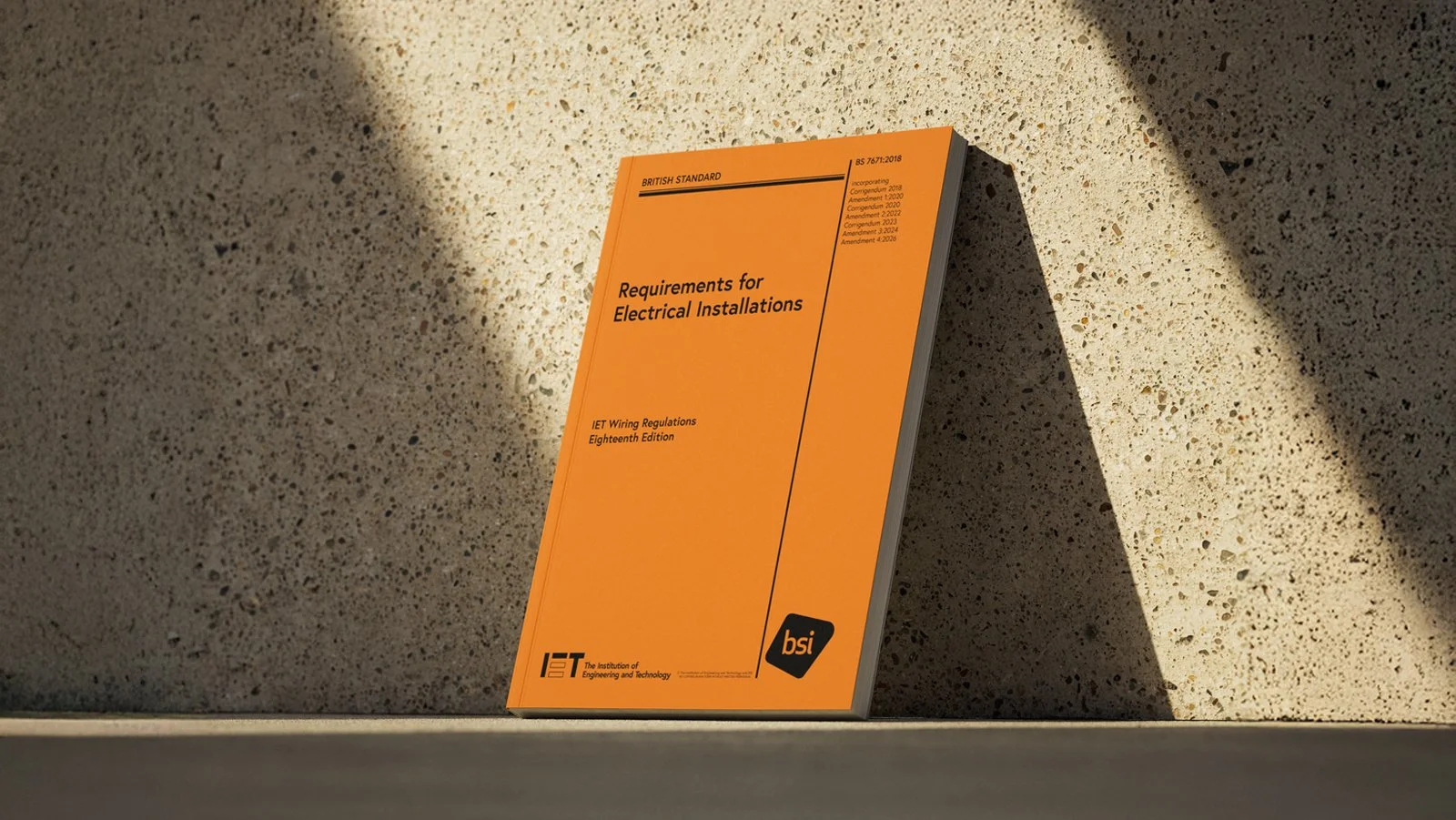
BS 7671 Update Confirmed: Amendment 4 (The Orange Book) Available from April 2026
The IET has confirmed that Amendment 4:2026 to BS 7671 (the 18th Edition Wiring Regulations) will be published on 15 April 2026. Known as the Orange Book, the update introduces key changes reflecting modern electrical installations, including new requirements for battery energy storage systems, Power over Ethernet (PoE), functional earthing for ICT systems, and revised rules for medical locations. The amendment can be implemented immediately from publication, with the current standard remaining valid until October 2026.

UK First as AI Power Infrastructure Takes a Major Step Forward
ABB and Ark Data Centres are installing the UK’s first medium-voltage uninterruptible power supply (UPS) system to support high-density AI workloads, marking a major step forward in data centre power infrastructure. Designed to handle the intense energy demands of artificial intelligence, the system offers improved efficiency, scalability, and resilience compared to traditional low-voltage UPS solutions, helping ensure reliable, uninterrupted power as AI-driven computing continues to grow across the UK.

Clean Energy Targets at Risk Without Major Workforce Investment, Committee Warns
A parliamentary committee has warned that the Government will only meet its clean energy and decarbonisation targets if there is significant investment in the UK workforce, clearer policy direction for industry, and a stronger role for local authorities. Stephen Melton, Director of Commercial and Compliance at NAPIT, said the UK needs around 250,000 additional workers to meet housing targets alone, with further demand driven by retrofit and renewable projects. The Climate Change Committee estimates up to 725,000 new jobs could be created in the next four years, highlighting major opportunities for electricians and installers, while reinforcing calls from Bill Esterson for long-term policy certainty, clearer guidance on environmental levies, and the swift delivery of the Warm Homes Plan.