

Low carbon cement & AI powered emissions tracking, Inside Amazon’s first UK ‘net zero’ delivery station
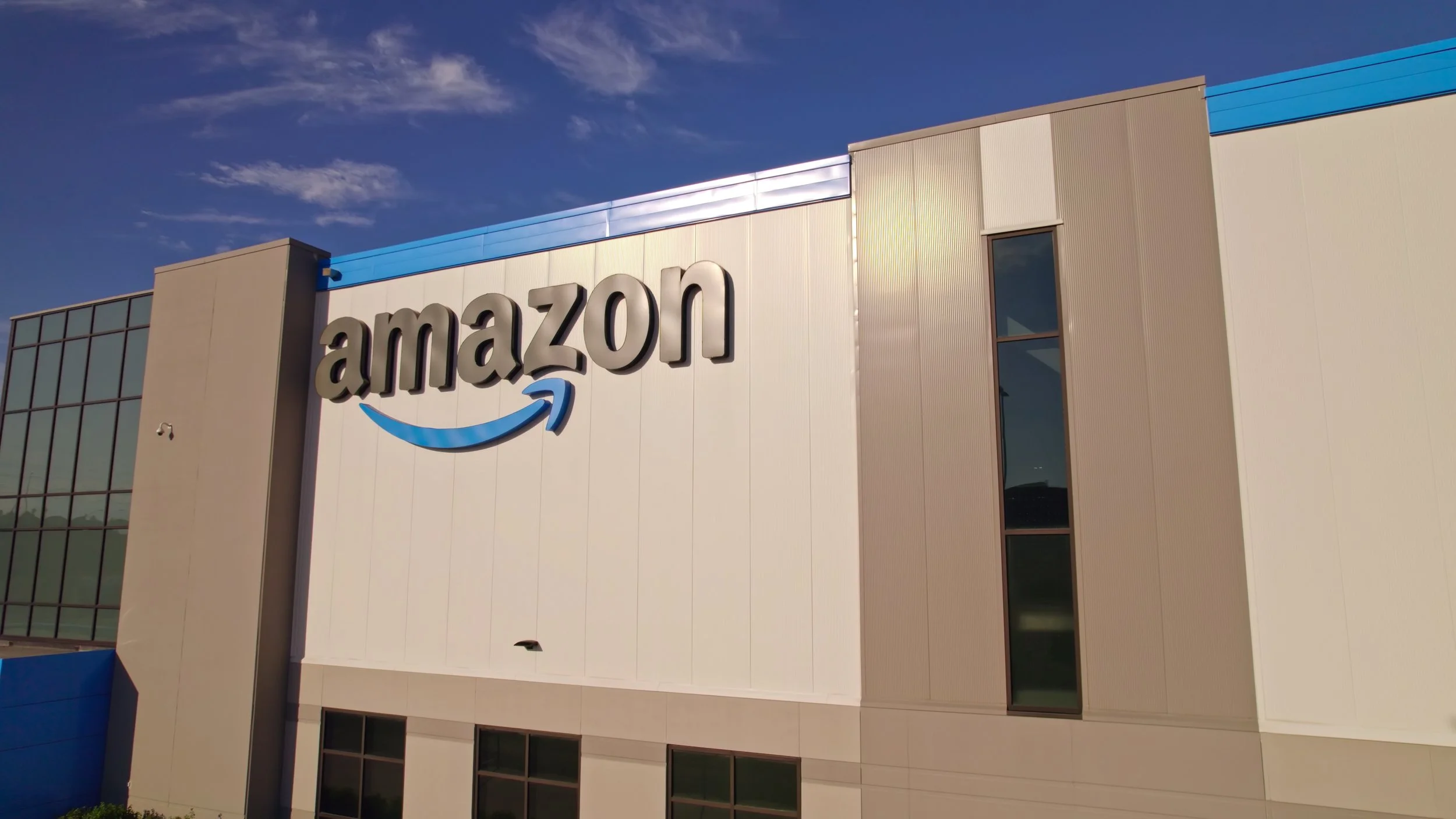
Construction has begun on Amazon’s first UK delivery station designed to operate at net zero carbon emissions, a landmark project that reflects how rapidly the logistics and construction sectors are being reshaped by climate commitments.
For a company of Amazon’s scale, buildings are not simply operational assets, they are carbon liabilities if poorly designed, and strategic climate levers if engineered correctly. Here, we explore how Amazon is approaching this development, from low carbon concrete to AI enabled emissions tracking, and why the project matters for the wider UK built environment.
A flagship moment in Amazon’s climate strategy
Amazon committed in 2019 to achieve net zero carbon across its operations by 2040 through its Climate Pledge, positioning itself a decade ahead of the Paris Agreement timeline. Since then, the company has expanded renewable energy procurement, electrified parts of its delivery fleet and invested in energy efficiency across fulfilment centres and data infrastructure.
This new UK delivery station marks a deeper integration of carbon reduction into the physical construction process itself. Rather than treating sustainability as an operational afterthought, the building has been designed with whole life carbon in mind, addressing both embodied and operational emissions from the outset. That distinction is important. For industrial buildings, embodied carbon, the emissions associated with materials and construction activity, can represent a significant proportion of total lifetime impact.
Low carbon cement, addressing embodied emissions at source
Concrete remains one of the most carbon intensive materials used in construction. Cement production alone accounts for approximately 7 to 8 percent of global carbon dioxide emissions, largely due to the energy intensive clinker production process and the chemical release of CO₂ during calcination. For large scale logistics facilities, which require extensive reinforced slabs and foundations capable of supporting heavy racking systems and vehicle movements, reducing concrete related emissions is critical.
Amazon’s project incorporates low carbon cement alternatives, including the use of supplementary cementitious materials such as ground granulated blast furnace slag. By partially replacing traditional Portland cement, the carbon intensity of the concrete mix can be significantly reduced without compromising structural performance. In some applications, embodied carbon reductions of 30 to 70 percent are achievable, depending on substitution rates and curing requirements.
AI powered carbon tracking during construction
The significance of this move extends beyond a single building. It signals that low carbon concrete is moving from niche innovation to mainstream procurement specification, particularly where corporate clients are setting science aligned decarbonisation targets.
In addition to material choices, the project is distinguished by its use of digital carbon tracking tools during construction. Traditionally, whole life carbon assessments are completed at design stage and then revisited post completion. However, this retrospective approach limits the ability to intervene if emissions exceed projections.
For this scheme, AI enabled systems are being deployed to monitor fuel consumption from plant and machinery, track delivery logistics and quantify embodied carbon associated with procurement packages. In effect, the site operates with a live carbon dashboard, comparable to financial cost control systems but focused on emissions performance.
This approach introduces accountability in real time. If transport emissions rise due to inefficient logistics, or if material substitutions increase embodied carbon beyond forecast levels, the project team can respond before completion. In an industry often criticised for slow digital adoption, this represents a practical example of data driven sustainability management rather than aspirational reporting.
Designing for operational net zero
Operational emissions form the second half of the net zero equation. Delivery stations operate extended hours, with lighting, charging infrastructure, automation systems and climate control contributing to significant energy demand.
The facility has been designed to minimise this demand through high efficiency LED lighting systems, advanced building management controls and electrified heating solutions such as air source heat pumps. Rooftop solar photovoltaic arrays are expected to generate on site renewable electricity, reducing reliance on grid supplied power and lowering operational carbon intensity.
Importantly, the building also supports Amazon’s expanding electric vehicle fleet in the UK, providing charging infrastructure that aligns depot operations with wider transport decarbonisation goals. In this context, the delivery station becomes part of a broader integrated low carbon logistics system rather than a standalone sustainable building.
Supply chain transparency and Scope 3 accountability
A genuine net zero strategy cannot ignore Scope 3 emissions, those arising from the wider value chain. Amazon has increasingly required suppliers to disclose carbon data and align with science based targets, embedding sustainability criteria into procurement frameworks.
For construction partners, this means providing Environmental Product Declarations for key materials, evidencing reduced reliance on fossil fuelled plant and demonstrating alignment with long term decarbonisation pathways. The result is a cascading effect, where a single client’s climate ambition influences material producers, subcontractors and logistics providers across the supply chain.
Such expectations reflect a broader shift within the UK construction sector toward whole life carbon assessment and embodied carbon transparency. Corporate leadership is, in many cases, advancing faster than regulation.
A meaningful step, or a marketing milestone
The credibility of any net zero claim ultimately rests on clear boundaries and transparent reporting. True net zero operational performance requires first reducing demand, then sourcing renewable energy, and only offsetting residual emissions through high quality carbon removals.
If independently verified and transparently reported, Amazon’s UK delivery station could become a benchmark for low carbon logistics infrastructure. If not, it risks being perceived as a symbolic milestone rather than a structural shift.
At present, the integration of low carbon materials, digital emissions monitoring and electrified operations suggests a systems level approach rather than a collection of isolated green features. For the construction industry, the implication is clear. Carbon performance is rapidly becoming as fundamental as cost, programme and safety metrics.
As more global corporates pursue science aligned net zero pathways, projects of this nature are likely to move from flagship innovation to expected standard practice within the decade.
References
Amazon Climate Pledge
https://www.theclimatepledge.com
Amazon Sustainability Report
https://sustainability.aboutamazon.com
UK Green Building Council, Net Zero Carbon Buildings Framework
https://www.ukgbc.org/climate-change-and-energy/net-zero-carbon-buildings-framework
World Green Building Council, Bringing Embodied Carbon Upfront
https://www.worldgbc.org/advancing-net-zero/embodied-carbon
International Energy Agency, Cement and CO₂ Emissions
https://www.iea.org/reports/cement