
BS 7671 Update Confirmed: Amendment 4 (The Orange Book) Available from April 2026
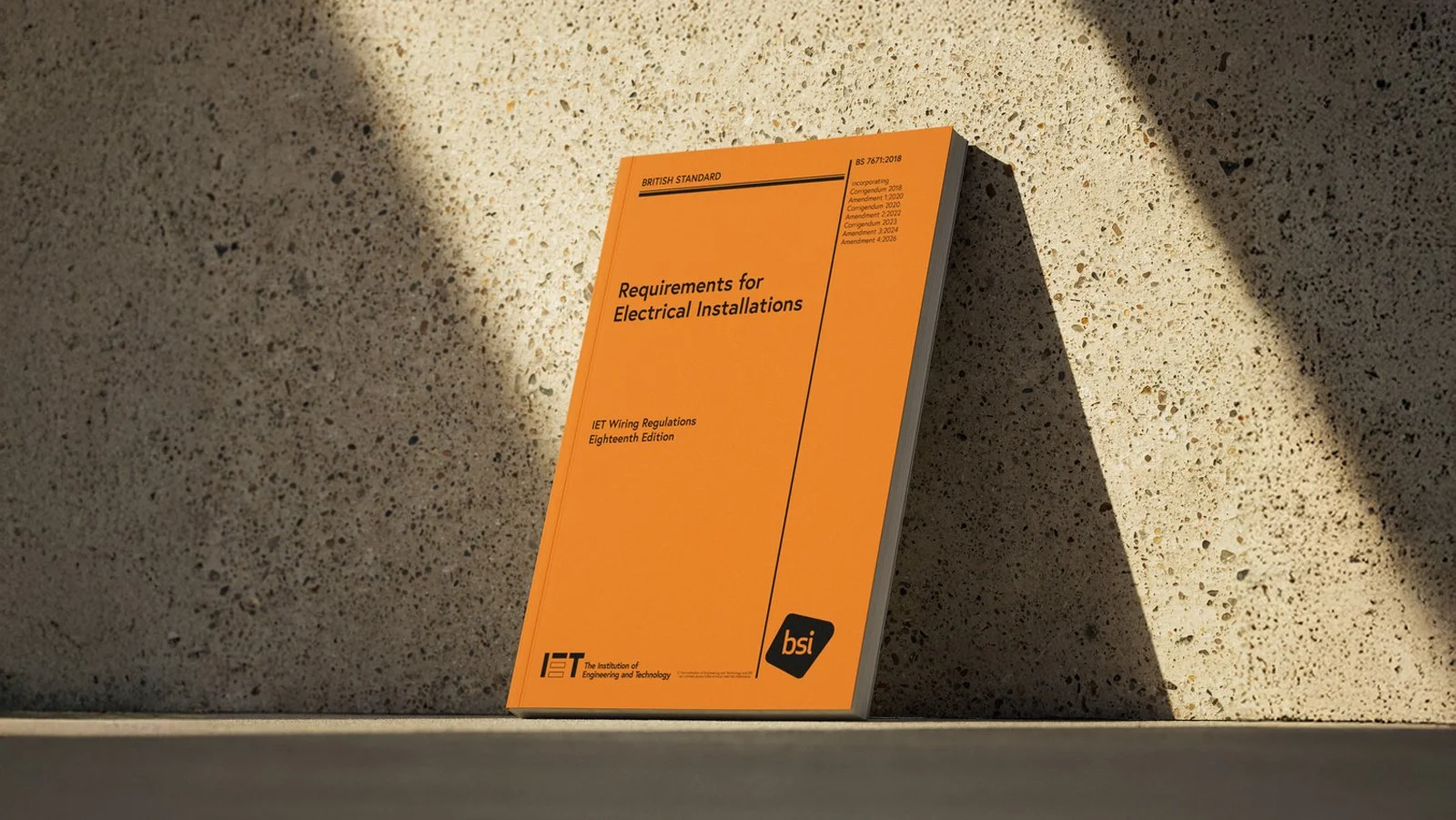
The Institution of Engineering and Technology (IET) has confirmed that the latest update to the UK’s national standard for low-voltage electrical installations, BS 7671, will be published on 15 April 2026.
Co-published with the British Standards Institution (BSI), Requirements for Electrical Installations: IET Wiring Regulations is the definitive rulebook used across the industry by electricians, electrical engineers, inspectors and building control professionals to ensure installations are safe, compliant and legally defensible.
What is changing?
The current standard, BS 7671:2018 (18th Edition), has already undergone several amendments since its original publication in 2018. The forthcoming Amendment 4:2026, recognisable by its orange cover, represents the most significant update in recent years and reflects the rapid evolution of electrical technologies now commonplace across domestic, commercial and industrial environments.
According to the IET, BS 7671 is aligned with European and international standards, and its development is continuous to ensure it keeps pace with innovation, new products and emerging risks.
Key areas addressed in Amendment 4
The latest amendment introduces major changes and new sections that respond directly to modern installation practices, including:
A new chapter on stationary secondary batteries, covering systems used for electrical storage and the supply of electrical installations, a critical step given the growth of renewable energy and battery storage systems.
A new section on functional earthing and functional equipotential bonding, specifically for information and communication technology (ICT) equipment and systems.
A dedicated new section on Power over Ethernet (PoE), reflecting its increasing use in lighting, controls, security and smart building applications.
A major revision of Section 710 – Medical Locations, including the introduction of a formal schedule of test results for recording the resistance of supplementary protective equipotential bonding conductors.
These updates aim to improve clarity, safety and consistency across a wide range of installation scenarios.
Industry reaction
Mark Coles, Head of Technical Regulations at the IET, commented:
“The IET is the authority for electrical installations in the UK and ensures that the National Wiring Regulations Committee carefully considers all necessary updates to the regulations to ensure they best meet the needs of the industry.
The amendment continues the thread of embracing new technologies, and the inclusion of a new section on stationary secondary batteries is an exciting step into the future of renewable sources of energy and their integration into our lives.”
Mike Smith, Director of Technical and Safety, Health & Environment at the Electrical Contractors’ Association, added:
“The latest update to the UK’s national electrical safety regulations brings several important changes designed to improve safety, reliability and clarity for everyone who uses or manages electrical systems.
These changes reflect the industry’s commitment to continual improvement and keeping pace with new technologies.”
Implementation timeline
Amendment 4:2026 to BS 7671:2018, commonly referred to as The Orange Book, is available for pre-order now. From 15 April 2026, it can be implemented immediately on new electrical work.
Until that date, electrical professionals should continue working to the current valid standard: BS 7671:2018 plus Amendments 2 and 3. Amendment 3:2024 (the Brown Book) will be formally withdrawn on 15 October 2026, six months after the publication of Amendment 4.
Coles emphasised the importance of early preparation:
“Amendment 4 is an essential update to provide for the safety of electrical installations in the UK, and it is now imperative that the industry is ready to work to this amendment before the current standard is withdrawn.”
What this means for electricians and employers
With substantial changes affecting renewables, energy storage, ICT systems and medical environments, the publication of Amendment 4 will have direct implications for design, installation, inspection and testing practices. Training, upskilling and familiarisation will be essential to ensure continued compliance and competence across the industry as the new regulations come into force.