
ECS Health, Safety & Environmental Assessment: Your 2026 Guide
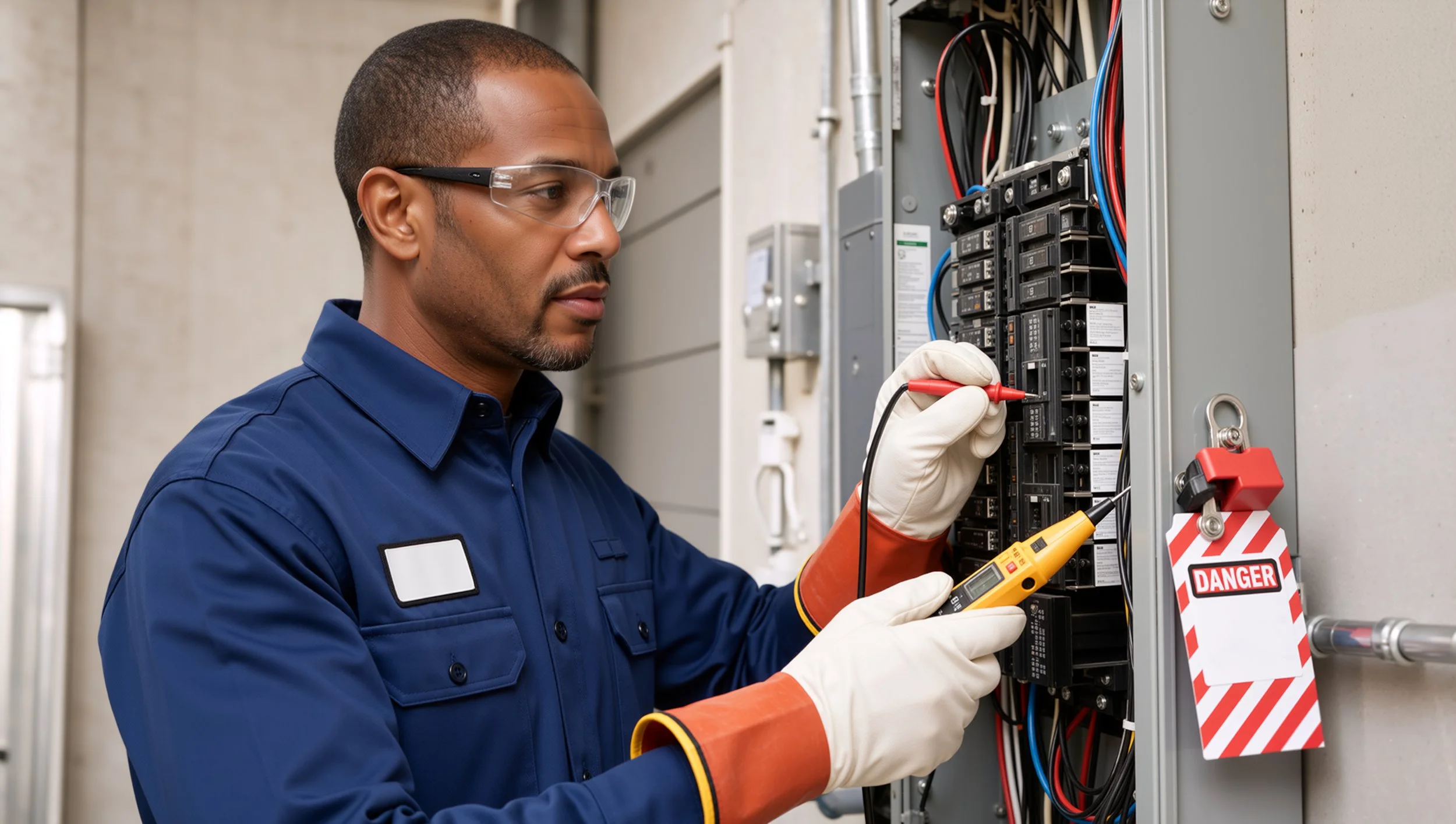
If you’re training to become an electrician and hoping to start gaining experience on site, you’ll probably come across the ECS Health, Safety & Environmental (HS&E) Assessment fairly early in your journey.
For many new entrants to the electrical industry, passing the assessment is an important step towards obtaining an appropriate ECS card and becoming more employable for site-based roles. But what exactly does the assessment involve? How difficult is it? What should you revise? And do you definitely need to take it?Here’s what you need to know in 2026.
What is the ECS Health, Safety & Environmental Assessment?
The Electrotechnical Certification Scheme (ECS) is the industry-recognised card scheme for electrotechnical workers in the UK and is a partner of the Construction Skills Certification Scheme (CSCS). Around 175,000 electrotechnical workers currently hold ECS cards.
Unlike a general CSCS card, an ECS card is specifically designed for people working within electrotechnical occupations. Depending on the type of card, it can provide evidence of areas including your identity, occupation, qualification status and health, safety and environmental awareness.
For anyone hoping to work on commercial or construction sites, this can be particularly important. ECS states that people working on commercial and industrial sites, data centres, NHS facilities, schools and other controlled-access projects are likely to be asked for an ECS card.
One of the requirements for most ECS card applications is therefore demonstrating an appropriate level of health, safety and environmental knowledge.
This can normally be achieved by either:
passing the ECS Health, Safety & Environmental Assessment; or
holding a qualification or certificate that provides a recognised exemption.[3]
For trainees and career changers, the assessment is therefore worth understanding early in your training.
What does the ECS assessment involve?
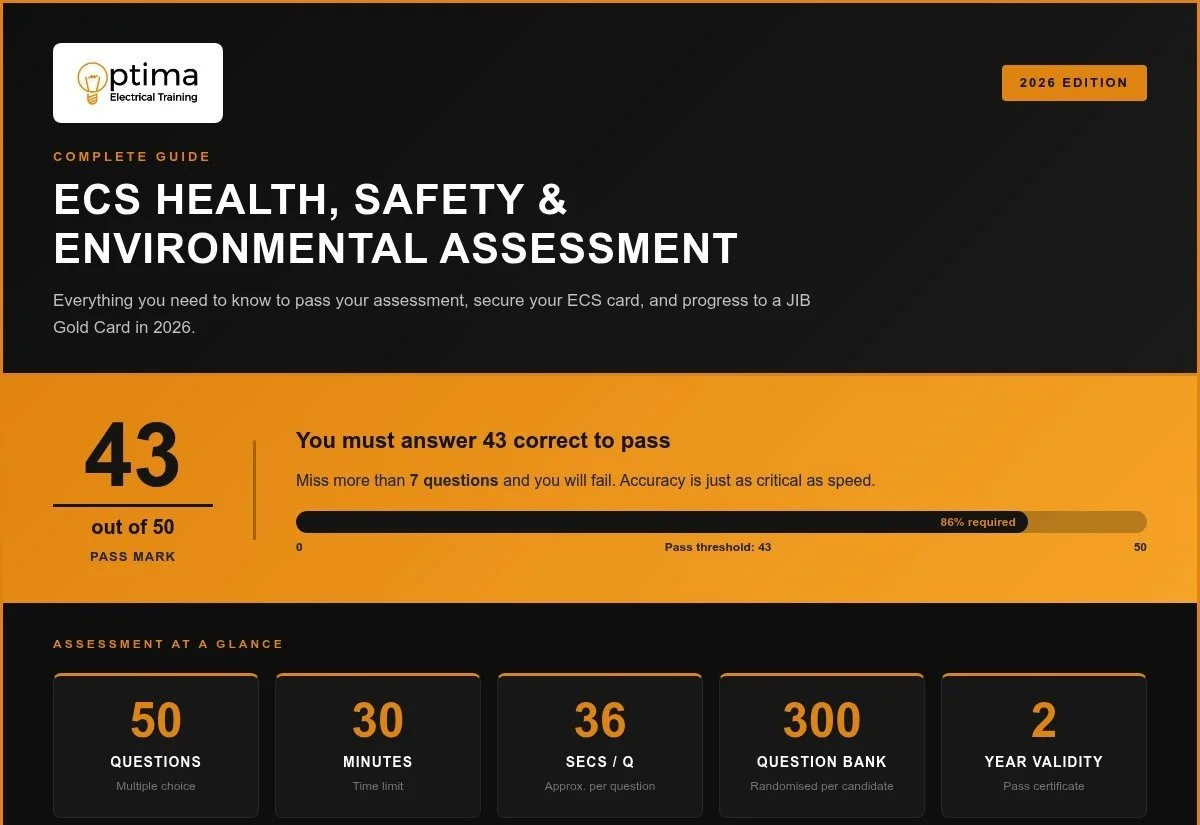
The current ECS HS&E Assessment consists of 50 multiple-choice questions, which must be completed within 30 minutes. To pass, you need to answer at least 43 questions correctly.
That may sound demanding, but candidates have one major advantage: ECS publishes a free official revision guide containing the question bank used to generate the assessment.
The actual questions are randomly selected from a database of more than 300 questions, so simply memorising a few practice tests isn't the best strategy. Instead, revision should give you a good understanding across all of the subject areas.
The assessment is closed book, meaning revision materials cannot be used while taking it, whether you sit the assessment in person or remotely.
What subjects should you revise?
The assessment covers 11 areas of health, safety, environmental and electrotechnical knowledge.
These are:
General Health and Safety at Work
Manual Handling Operations
Reporting Accidents
Personal Protective Equipment at Work
Health and Hygiene
Fire and Emergency, including Fire Safety in Buildings
Work at Height
Work Equipment
Special Site Hazards
Electrotechnical
Environmental issues.
Importantly, the number of questions isn't divided equally between the subjects. Fire and Emergency, including Fire Safety in Buildings, currently accounts for nine questions. General Health and Safety and Electrotechnical knowledge each account for six, while Work at Height accounts for five. So, while you need a good overall understanding, it makes sense to pay attention to how the assessment is structured when planning your revision.
ECS vs CSCS: what's the difference?
This is an area that often causes confusion for people entering the electrical industry.
The ECS is a partner of CSCS, but the standard CITB Health, Safety and Environment test used for CSCS applications is not accepted in place of the ECS HS&E Assessment. The reason is that ECS includes safety knowledge specifically relevant to electrotechnical workers, including fire safety.
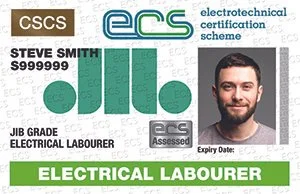
Similarly, someone planning a career as an electrician will generally need to look at the ECS card appropriate to their occupation rather than simply obtaining a generic CSCS card. For example, an Electrical Labourer ECS card is designed for someone supporting electricians and other qualified workers with tasks such as cable installation and other work carried out under supervision.
It doesn't mean the holder is a qualified electrician, and the card shouldn't be viewed as a substitute for electrical qualifications or competency. Instead, think of ECS as a way of demonstrating your current occupational status and the requirements you have achieved at that particular stage of your career.
Do you need to take the assessment?
Not necessarily.
Before paying for an assessment, it's worth checking the current ECS exemption list.
ECS recognises a range of qualifications and assessments which can provide an exemption when they have been achieved within the required timeframe. The current list includes certain Level 3 electrotechnical NVQ/SVQ qualifications, apprenticeship completion, CITB Health and Safety Awareness, CCNSG Safety Passport courses, SSSTS, SMSTS and specified NEBOSH qualifications.
Generally, these exemptions must have been achieved within three years of the ECS card application.
This is an important distinction for electrical trainees. Completing a classroom-based electrical qualification doesn't automatically mean you are exempt from the assessment. For example, the requirements for the Electrical Labourer card state that someone holding a recognised theory qualification such as City & Guilds 2365 will still need the ECS HS&E Assessment unless another valid exemption applies.
Similarly, don't assume that completing the 18th Edition Wiring Regulations automatically removes the requirement. Always check the current ECS criteria for the particular card you're applying for rather than relying on information from forums, social media or an old colleague's application.
How to prepare for the ECS assessment
The best starting point is the official ECS revision material.
ECS provides its revision guide free of charge, and because the assessment questions are selected from the published question database, this should be your primary revision resource.
For adult learners who may be balancing electrical training with work and family commitments, shorter regular revision sessions can often be easier to fit around everyday life. You might, for example, work through one or two subject areas at a time before completing practice questions. Keep a note of questions you repeatedly get wrong and return to those topics rather than continually revising material you already know.
It is also worth practising under timed conditions.
Thirty minutes for 50 questions gives you an average of only 36 seconds per question. You don't necessarily need to answer every question that quickly, but becoming familiar with the pace of the assessment can make the real thing feel much less intimidating.
Most importantly, aim to understand why an answer is correct.
Health and safety knowledge isn't only there to get you through an assessment. Once you begin working on site, understanding safe working practices, PPE, manual handling, working at height, electrical hazards and emergency procedures becomes part of your everyday responsibility.
Can you take the ECS assessment online?
Yes.
The ECS assessment can be completed remotely through MyECS, using the ECS Remote Invigilation Service. Employers can also arrange assessments through the Employer Portal. For remote assessment you'll need an appropriate computer setup, webcam, internet connection and a suitable private environment.
Alternatively, face-to-face assessments are available through selected employers, training providers and partner organisations across England, Wales and Northern Ireland.
This flexibility can be particularly useful for adult learners who are fitting their electrical training around existing employment.
ECS recommends choosing where you want to take the assessment, downloading the official revision material, completing your preparation and then taking the assessment. Once you've passed, you can continue with the relevant card application through MyECS.
How long does an ECS assessment pass last?
A successful ECS HS&E Assessment is valid for two years for the purpose of making your ECS card application.
That doesn't mean you need to retake the assessment every two years regardless of your card. Once your card has been issued, the assessment is recognised for the life of that card. When the card is due for renewal, you'll need to meet the health and safety requirements applying at that point.
This is another reason to avoid taking the assessment unnecessarily early. Ideally, it should form part of a planned route towards the ECS card you actually need.
Which ECS card should a trainee electrician apply for?
This depends on your qualifications, employment status and where you are in your training.
For many adult learners completing electrical qualifications but not yet qualified as electricians, the Electrical Labourer card is the card to apply for.
The Electrical Labourer card is specifically intended for someone assisting electricians and other qualified staff under supervision. Importantly, ECS makes clear that a Labourer should assist rather than undertake the skilled craft work of an electrician. The eligibility requirements also go beyond simply passing the HS&E Assessment, so it's important to check the full criteria before applying.
As you gain further qualifications and workplace competence, your ECS status can progress with you.
From Electrical Labourer to ECS Gold Card
For many people entering the trade, the long-term target is the ECS Installation Electrician Gold Card.
Passing the HS&E Assessment alone won't make you eligible for a Gold Card. For an Installation Electrician Gold Card, ECS currently requires evidence of a recognised UK Level 3 apprenticeship standard, JIB-approved competency-based qualification such as the appropriate NVQ, or equivalent, together with the required BS 7671 qualification and current health and safety requirements.
That distinction is particularly important for people taking the City & Guilds 2365 route. Completing Level 2 and Level 3 Electrical Installation Diplomas can provide valuable technical knowledge and help you progress into electrical employment, but the classroom qualifications alone don't make you a fully qualified Installation Electrician.
For adult learners following this route, the next major stage is normally gaining relevant employment and completing the workplace competency qualification, followed by the required end-point practical assessment such as the AM2.
It is this combination of technical knowledge and demonstrated workplace competence that ultimately takes you towards qualified electrician status.
The ECS assessment is one step – not the destination
It can be tempting to see the ECS HS&E Assessment as another exam standing between you and your new career.
A better way to view it is as one part of a much wider progression route.
If you're at the beginning of your electrical training, your journey might include completing your Level 2 and Level 3 technical qualifications, obtaining the appropriate ECS card, gaining practical site experience, finding electrical employment, completing your NVQ Level 3 and ultimately working towards your AM2 and ECS Gold Card.
Not everyone will follow exactly the same route, particularly those who already have substantial electrical experience or previous qualifications.
That's why it's important to understand what your next step should be rather than collecting qualifications and cards without a clear progression plan.
At Optima Electrical Training, we specialise in supporting adult learners at different stages of this journey, from those taking their first electrical qualification to experienced workers looking to formalise their competence and progress towards ECS Gold Card status.
If you're unsure which electrical qualification, ECS card or progression route is appropriate for you, contact the Optima team and we'll help you understand your options.
Thinking of Becoming a Qualified Electrician?
If you're interested in learning a skilled trade, why not train to become a certified professional?
At Optima, we provide comprehensive electrical training courses that equip you with the skills, qualifications, and confidence to work safely and legally in this vital industry.
Whether you’re just starting out or looking to expand your qualifications, our accredited training programmes will give you the knowledge, confidence, and credentials to meet new building standards and market demand.
✅ Hands-on training
✅ Industry-recognised certifications
✅ Expert instructors with real-world experience
✅ Courses tailored to upcoming regulations
Contact us today to embark on your training journey.
Contact us: Request Information
Email: info@optima-ect.com
Freephone +44 800 0371572