
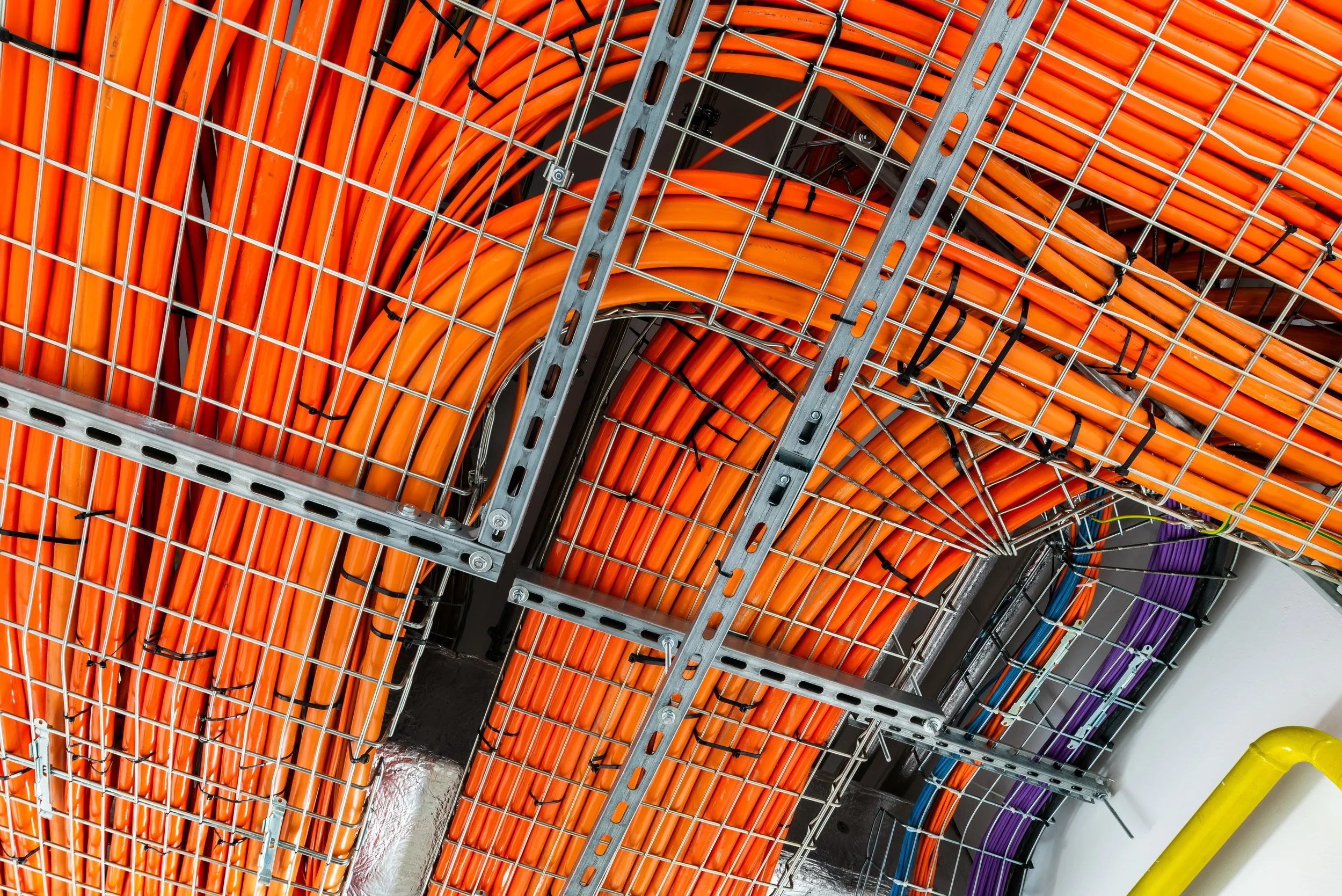
Cable containment is a fundamental part of electrical installation work, particularly in commercial and industrial environments. From cable tray and basket to trunking and conduit, these systems provide the infrastructure needed to route, support and protect electrical cables throughout a building.
Although containment installation is a routine part of many electrical projects, its importance extends well beyond keeping cables organised. Correct selection and installation contribute to electrical safety, long-term reliability, maintenance access and compliance with industry regulations.
Recent guidance from the British Electrotechnical and Allied Manufacturers' Association (BEAMA) has brought renewed attention to cable management, particularly the need to prevent wiring systems from collapsing prematurely during a fire.
For electricians and those entering the industry, it highlights why understanding cable containment is an important practical skill.
The Role of Cable Containment in Electrical Installations
Cable management systems are used across a wide range of buildings, from offices and retail premises to factories, warehouses and large infrastructure projects.
Different systems are selected according to the installation environment, cable requirements and intended use.
Common examples include:
Cable tray: Used to support and route cables, particularly across larger commercial and industrial installations.
Cable basket: An open wire-mesh system often used for power, data and communication cables.
Cable trunking: An enclosed system providing protection and an organised route for multiple cables.
Conduit: A rigid or flexible system used to protect and route cables, often where additional mechanical protection is required.
Cable ladder: Commonly used for heavier cable installations, including larger industrial and infrastructure projects.
The choice of containment depends on several factors, including cable weight, environmental conditions, mechanical protection, accessibility and future maintenance requirements.
BEAMA identifies cable management as an important element of electrical infrastructure, particularly as buildings incorporate increasingly complex electrical systems and technologies.
Why Installation Quality Matters
Installing containment involves more than fixing sections of tray or trunking to a wall or ceiling.
Electricians must consider the proposed cable routes, the supporting structure, appropriate fixings and the manufacturer's installation requirements.
Poorly installed containment can create problems throughout the working life of an electrical installation. Inadequate support, unsuitable fixings or poorly planned routes may lead to damaged cables, restricted maintenance access or difficulties when additional circuits are required.
On commercial projects, containment systems also need to accommodate other building services, including ventilation, plumbing and fire protection equipment.
This makes accurate measurement, interpreting technical drawings and coordinating work with other trades important aspects of the installation process.
For those gaining their first experience on commercial electrical projects, assisting with containment installation can provide valuable exposure to how larger electrical systems are planned and constructed.
New Guidance Highlights Fire Safety Responsibilities
In September 2026, BEAMA published updated guidance and a technical specification addressing the prevention of premature collapse of wiring systems during a fire.
The publications were developed with input from industry specialists and fire services to support the application of Regulation 521.10.202 of BS 7671.
This regulation requires wiring systems to be supported so that they are not liable to premature collapse in the event of a fire.
The requirement is particularly important because cables that become detached from their supports during a fire can obstruct escape routes or create hazards for firefighters entering a building.
Some plastic cable management products can soften or melt when exposed to high temperatures. Where necessary, suitable metallic supports and fixings must therefore be incorporated to prevent cables from falling prematurely.
The updated BEAMA guidance provides practical information on cable management design, installation, inspection and appropriate support arrangements.
Importantly, the objective is to prevent premature collapse, rather than necessarily maintain the electrical operation of a circuit during a fire. The Institution of Engineering and Technology (IET) has also clarified this distinction in its guidance on BS 7671.
What Does This Mean for Electricians?
The publication reinforces the importance of considering cable support and containment as part of the overall safety of an electrical installation.
For electrical contractors, this includes selecting suitable systems, following manufacturers' instructions and ensuring installations comply with the relevant requirements of BS 7671.
It also highlights the importance of inspecting existing containment arrangements when carrying out maintenance, alterations or refurbishment work.
On older installations, electricians may encounter wiring systems installed using methods that would not meet current requirements. Understanding how these systems should be assessed and, where necessary, improved is an important part of maintaining electrical safety.
The guidance is relevant across domestic, commercial and industrial installations, although the types of containment and support arrangements encountered will vary considerably.
Developing Practical Skills in Cable Containment
For adults training to become electricians, cable containment is one of the practical areas where technical knowledge and installation skills come together.
The City & Guilds 2365 Level 2 and Level 3 Diplomas in Electrical Installation introduce wiring systems, installation methods and the principles that underpin safe electrical work.
However, experience on real projects is particularly valuable in understanding how containment is installed at scale.
Working alongside experienced electricians may involve measuring and preparing cable routes, installing brackets and supports, assembling containment systems and assisting with cable installation.
These activities help develop familiarity with the materials, tools and working practices commonly encountered on commercial and industrial sites.
They also provide opportunities to understand how installation decisions affect other stages of a project, from cable pulling and termination through to inspection, testing and future maintenance.
An Essential Part of Electrical Safety
As electrical installations become more complex, effective cable management remains essential to their safety, performance and reliability.
The latest BEAMA guidance is a reminder that even established installation practices continue to develop as industry knowledge and regulatory requirements evolve.
For experienced electricians, keeping up to date with these developments is part of maintaining professional competence. For those entering the industry, developing sound containment installation skills provides a valuable foundation for working across a wide range of electrical projects.
Whether installing a small section of conduit or supporting extensive cable routes across a commercial building, the quality of cable containment plays an important role in delivering safe, reliable and maintainable electrical installations.
Thinking of Becoming a Qualified Electrician?
If you're interested in learning a skilled trade, why not train to become a certified professional?
At Optima, we provide comprehensive electrical training courses that equip you with the skills, qualifications, and confidence to work safely and legally in this vital industry.
Whether you’re just starting out or looking to expand your qualifications, our accredited training programmes will give you the knowledge, confidence, and credentials to meet new building standards and market demand.
✅ Hands-on training
✅ Industry-recognised certifications
✅ Expert instructors with real-world experience
✅ Courses tailored to upcoming regulations
Contact us today to embark on your training journey.
Contact us: Request Information
Email: info@optima-ect.com
Freephone +44 800 0371572