

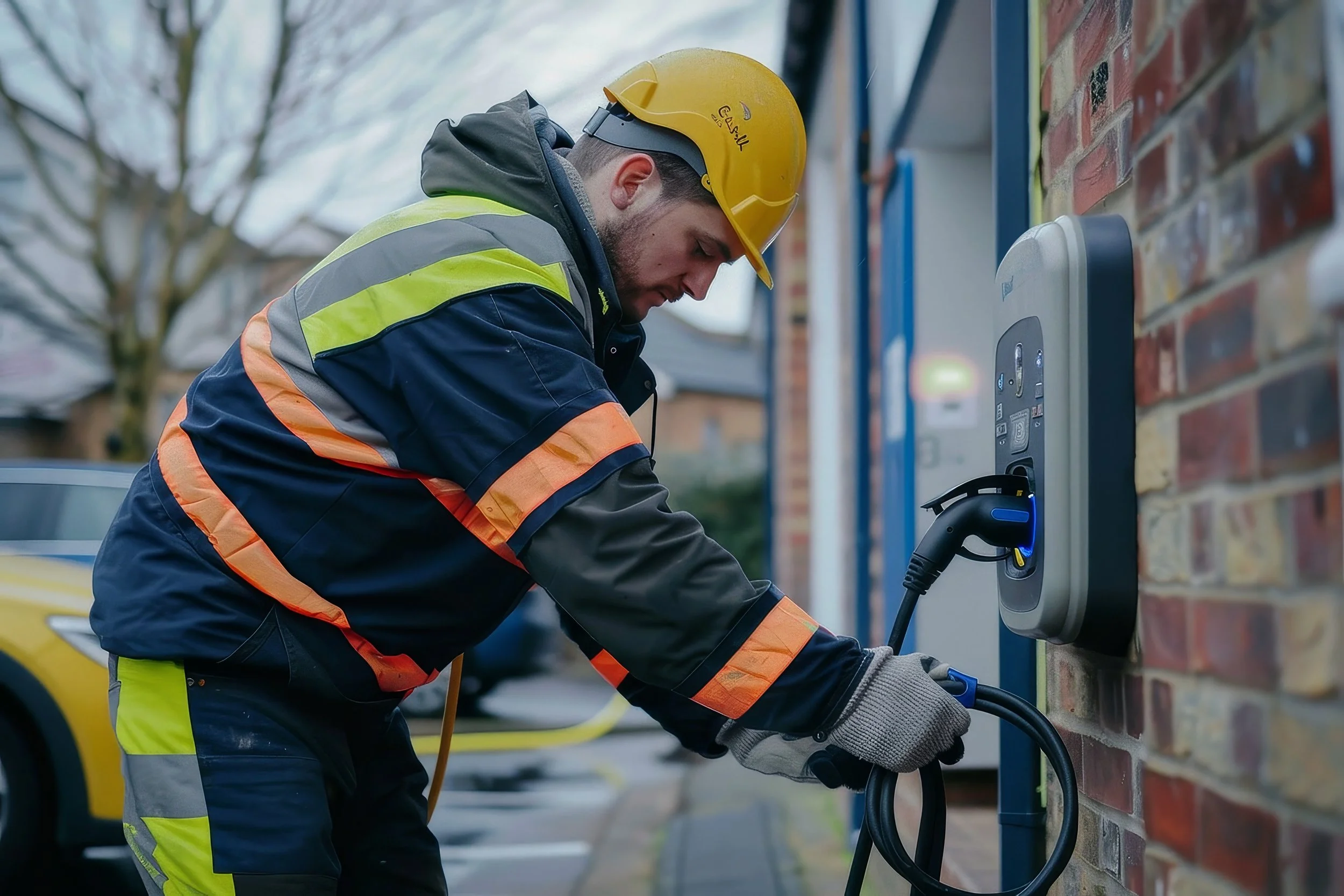
Electric vehicles are becoming an increasingly familiar sight on UK roads, and the infrastructure needed to support them continues to expand.
According to the Department for Transport, there were 121,171 publicly available EV chargers across the UK as of July 2026, including more than 28,000 rapid and ultra-rapid chargers.
Alongside the public charging network, homeowners and businesses are investing in charging facilities for private vehicles, company fleets and workplace parking.
For qualified electricians, this creates opportunities to develop specialist knowledge and broaden the range of electrical installation services they can offer.
However, installing EV charging equipment involves more than connecting a charger to an electrical supply. Installers need to understand the specific design, safety and regulatory requirements associated with these installations.
What Is the City & Guilds 2921-34 Qualification?
The City & Guilds Level 3 Award in the Requirements for the Design and Installation of Domestic and Small Commercial Electric Vehicle Charging Installations (2921-34) is designed for practising electricians who want to develop their knowledge of EV charging systems.
Introduced in September 2024, the updated qualification reflects developments in EV charging technology and industry requirements.
It focuses specifically on domestic and small commercial installations, such as charging equipment installed at homes, offices and smaller business premises.
The course builds on existing electrical knowledge, providing an understanding of the additional considerations involved in designing, installing and commissioning EV charging equipment.
What Does the Course Cover?
The City & Guilds 2921-34 qualification covers several important aspects of EV charging installation, including:
EV charging equipment: Understanding different types of charging equipment, their features and operating requirements.
Installation design: Assessing electrical supply capacity, load requirements and the suitability of existing installations.
Electrical safety: Understanding earthing arrangements, protective devices and protection against electric shock.
Wiring Regulations: Applying relevant requirements of BS 7671, particularly Section 722, which covers EV charging installations.
Inspection, testing and commissioning: Understanding the procedures needed to verify that an installation is safe and functioning correctly.
Documentation and handover: Identifying the information and certification required when completing an installation.
Energy storage: Understanding how electric vehicles can interact with electrical installations as part of wider energy management systems.
The qualification also introduces the relevant legislation, industry guidance and technical documentation associated with EV charging installations.
Assessment is through an online multiple-choice examination.
Why Is Specialist EV Charging Knowledge Important?
Although EV charging installations use many familiar electrical principles, they also introduce additional technical considerations.
For example, an installer may need to assess whether an existing electrical supply can accommodate the additional demand, determine appropriate protective measures and consider the implications of different earthing arrangements.
Some installations also incorporate smart charging technology, load management or integration with solar PV and battery storage systems.
The IET provides detailed guidance through its Code of Practice for Electric Vehicle Charging Equipment Installation, which supports electricians in understanding the relevant technical and safety requirements.
Developing this specialist knowledge helps electricians approach EV charging projects with greater confidence and a clearer understanding of the applicable standards.
Who Is the Course Suitable For?
The City & Guilds 2921-34 is intended for qualified, practising electricians who want to extend their existing skills into EV charging installations.
It may be particularly relevant to electricians working in domestic installation, commercial electrical contracting, property maintenance or facilities management.
Learners must demonstrate an appropriate level of existing electrical competence, normally through a recognised Level 3 electrotechnical qualification or accepted equivalent, together with evidence that their knowledge remains current.
For those still working towards becoming fully qualified electricians, the City & Guilds Level 2 and Level 3 Diplomas in Electrical Installation, followed by the appropriate NVQ Level 3 and practical assessment, provide a route towards developing the competence needed before specialising.
The 2921-34 is an additional specialist qualification, rather than a replacement for the core qualifications required to become an electrician.
Develop Your Electrical Skills with Optima
At Optima Electrical Training, the City & Guilds 2921-34 EV Charge Point Installers Course provides an opportunity for qualified electricians to build on their existing knowledge and develop skills in a growing area of the industry.
Whether you're an experienced electrician looking to expand your services or planning your next stage of professional development, EV charging is one of several specialist areas worth considering.
With charging technology continuing to evolve, understanding the requirements for safe, compliant installations can be a valuable addition to an electrician's professional skill set.
Interested in developing your EV charging installation skills? Explore Optima Electrical Training's City & Guilds 2921-34 course to find out more about the qualification, entry requirements and available training options.
Thinking of Becoming a Qualified Electrician?
If you're interested in learning a skilled trade, why not train to become a certified professional?
At Optima, we provide comprehensive electrical training courses that equip you with the skills, qualifications, and confidence to work safely and legally in this vital industry.
Whether you’re just starting out or looking to expand your qualifications, our accredited training programmes will give you the knowledge, confidence, and credentials to meet new building standards and market demand.
✅ Hands-on training
✅ Industry-recognised certifications
✅ Expert instructors with real-world experience
✅ Courses tailored to upcoming regulations
Contact us today to embark on your training journey.
Contact us: Request Information
Email: info@optima-ect.com
Freephone +44 800 0371572