
Electrical Tools for Beginners: What Do You Actually Need?
Walk into any electrical wholesaler or browse an electrician’s tool kit online and it can be difficult to know where to start. Screwdrivers, cutters, testers, pliers, drills, levels, socket sets – not to mention an increasingly large selection of power tools.
If you’re training to become an electrician or looking for your first Electrical Labourer or Mate role, the good news is that you don’t need to own everything from day one.
A small selection of useful hand tools is a much better starting point. Your collection can then grow as you gain experience and understand what you actually need for the type of work you’re doing.
Start with the basics
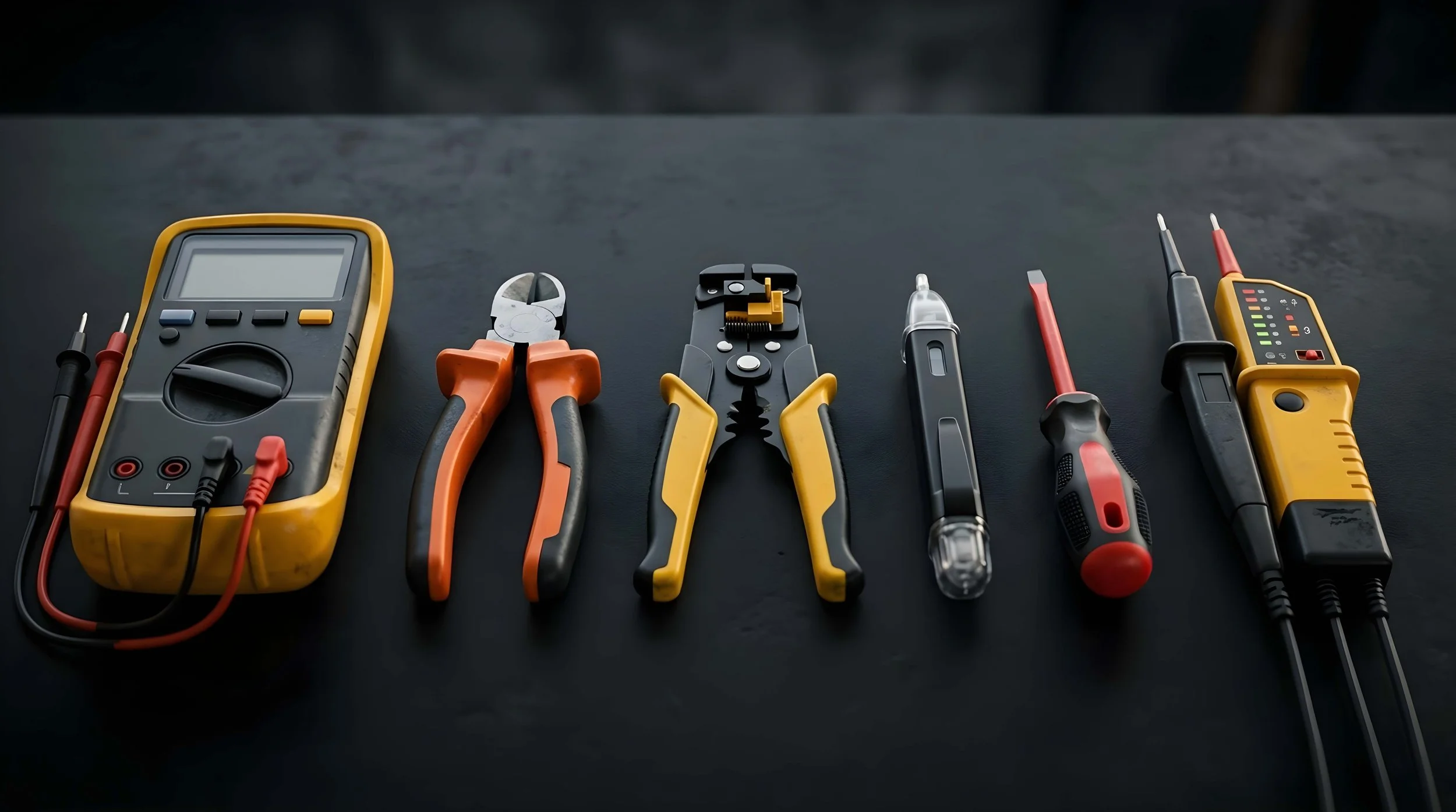
For someone beginning their electrical career, a basic tool kit might include:
VDE insulated screwdrivers – a small selection of commonly used sizes is a sensible starting point.
Combination pliers – useful for gripping, bending and cutting.
Side cutters – one of the tools you’re likely to use regularly when working with cable.
Wire strippers – for removing insulation accurately without damaging conductors.
Tape measure – simple, inexpensive and useful on almost every job.
Utility knife – useful for a range of general site tasks, provided it is used safely and appropriately.
Spirit level – a compact level can be useful when fitting containment and accessories.
Pencil or suitable marker – easily forgotten, but constantly useful for marking positions and measurements.
You may also find a small tool bag or organiser worthwhile. It keeps everything together and is much easier to carry around site than a loose collection of tools.
Don't rush to buy everything
Once you start working alongside experienced electricians, you'll probably see tools and equipment you'd like to add to your own kit.
That doesn't mean you need to buy them immediately.
Expensive power tools, specialist test equipment, large socket and spanner sets and tools for specific types of installation can usually wait until you know they are genuinely useful for your work.
Employers also have different expectations about what workers should provide themselves. Some may expect you to bring basic hand tools, while particular equipment or specialist tools may be supplied for the job.
If you're applying for your first role, ask what you're expected to provide rather than spending a large amount of money beforehand.
What about electrical test equipment?
This is one area where beginners should be particularly cautious.
Electrical testing isn't simply a matter of owning the right piece of equipment. You need the knowledge, training and competence to select and use test equipment correctly and to understand the results.
As your training and workplace responsibilities develop, equipment such as an approved voltage indicator and proving unit may become part of your working kit. More advanced test instruments may follow later.
But there is little benefit in a beginner buying expensive test equipment simply because they have seen it in an experienced electrician's tool bag.
Look after the tools you do own
You don't need a huge collection, but it is worth looking after what you have.
Keep tools clean and dry, store them properly and regularly check them for wear or damage. Insulated tools should be inspected before use, and anything damaged should be taken out of service.
It's also a good idea to mark your tools clearly with your name or another identifier. On a busy site where several people may own identical tools, it's surprisingly easy for equipment to get mixed up.
Keeping a simple record or photographs of more valuable tools can also be useful.
Buy for the job you're doing
As you gain experience, you'll get a much clearer idea of which tools you use regularly.
Someone working mainly on domestic installations may gradually build a different kit from somebody working on large commercial sites, industrial installations or containment.
Rather than buying a huge pre-selected kit, adding tools gradually allows you to spend your money on equipment that is genuinely useful to you. Where possible, choose tools designed for the task and buy from reputable manufacturers and suppliers.
Most importantly, make sure you understand how to use a tool safely before using it.
Don't let your tool kit stop you applying for work
If you're looking for your first opportunity in the electrical industry, don't assume employers expect you to arrive with the contents of an experienced electrician's van.
For an entry-level Labourer or Mate role, employers may be just as interested in whether you are reliable, punctual, safety-conscious, willing to learn and able to follow instructions.
Having a sensible selection of basic hand tools can demonstrate that you're prepared for practical work, but your tool collection can develop alongside your skills and experience.
Every experienced electrician had to start somewhere – and their tool kit probably grew one job at a time too.
Thinking of Becoming a Qualified Electrician?
If you're interested in learning a skilled trade, why not train to become a certified professional?
At Optima, we provide comprehensive electrical training courses that equip you with the skills, qualifications, and confidence to work safely and legally in this vital industry.
Whether you’re just starting out or looking to expand your qualifications, our accredited training programmes will give you the knowledge, confidence, and credentials to meet new building standards and market demand.
✅ Hands-on training
✅ Industry-recognised certifications
✅ Expert instructors with real-world experience
✅ Courses tailored to upcoming regulations
Contact us today to embark on your training journey.
Contact us: Request Information
Email: info@optima-ect.com
Freephone +44 800 0371572