

City & Guilds 2365: Building Your Electrical Skills from Level 2 to Level 3
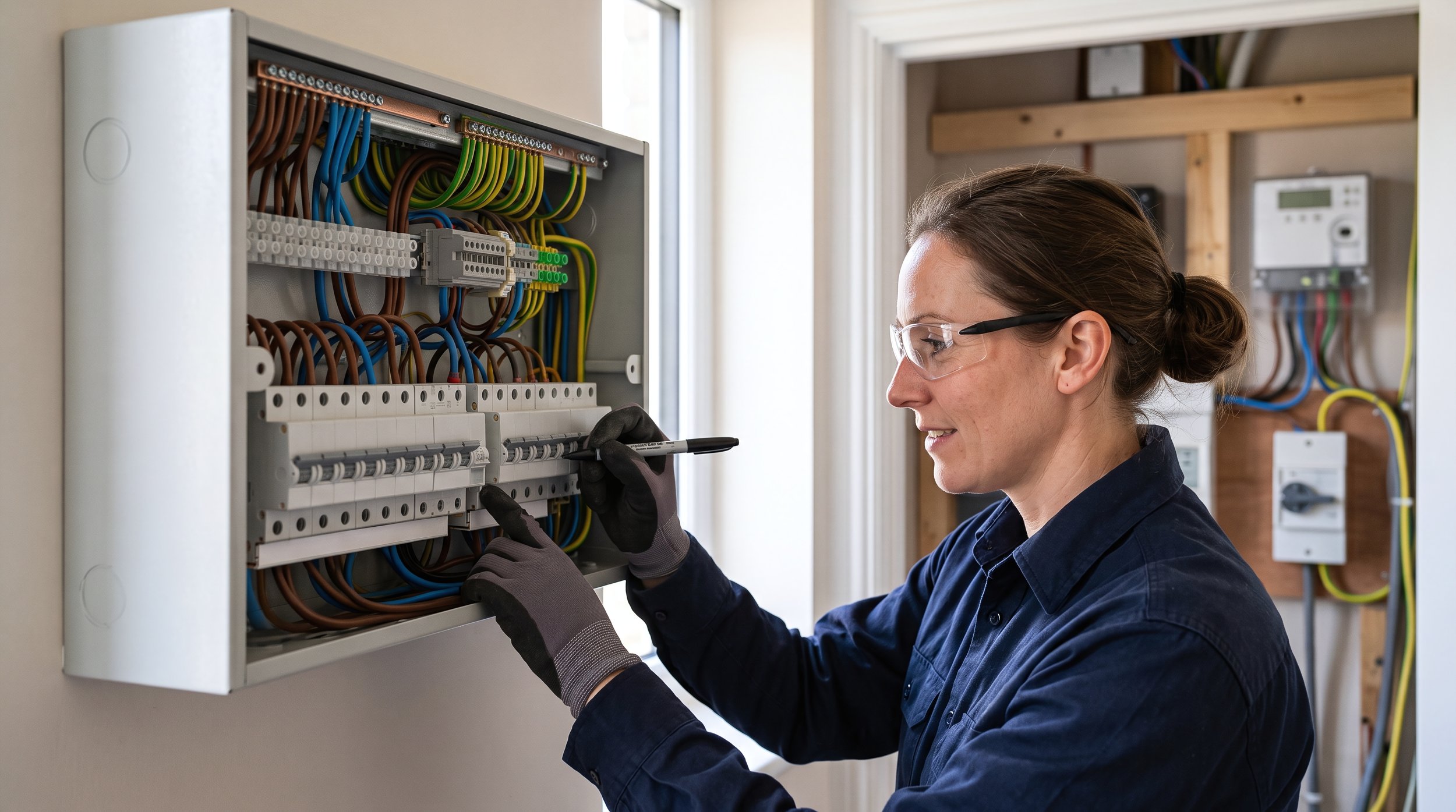
For anyone looking to start a career in the electrical industry, the City & Guilds 2365 Diploma in Electrical Installations provides a recognised route for developing the technical knowledge and practical skills needed to take those first important steps.
The qualification is particularly suited to people who are new to the industry and want to train as an electrician without following an apprenticeship route. Learners do not need to be employed in an electrical role to begin their training, making it a popular option for adult career changers.
For many learners, the journey starts with the C&G 2365 Level 2 Diploma, before progressing to the more advanced Level 3 Diploma.
So, what do the two levels cover – and how does your knowledge develop as you progress?
Level 2: Learning the fundamentals
City & Guilds describes the Level 2 qualification as being suitable for people who want to learn about electrotechnical principles and practices and develop the skills required for a career in the electrical industry.
For someone completely new to electrical work, Level 2 provides an important foundation. Learners are introduced to key areas including electrical installation technology, electrical science, health and safety and practical installation skills.
This means learning both how electrical installations work and how electrical work is carried out in practice.
Alongside classroom theory, practical training gives learners the opportunity to become familiar with electrical tools, equipment, cables and accessories and begin developing installation skills in a controlled workshop environment.
For a career changer, this is often the stage where electrical terminology and principles that initially seem unfamiliar begin to make much more sense.
Progressing to Level 3
Once the foundations are in place, the City & Guilds 2365 Level 3 Diploma develops electrical knowledge further. The subjects become more advanced, reflecting the greater level of understanding needed as learners progress towards working in the industry.
Level 3 covers areas including electrical science, electrical installation design, fault diagnosis and inspection and testing. Rather than starting again with a completely new set of skills, Level 3 builds on much of the knowledge developed at Level 2.
Electrical principles are explored in greater depth. Learners encounter more complex systems and calculations, while practical and technical subjects increasingly require them to apply what they have already learned.
That progression from foundation knowledge at Level 2 to more advanced understanding at Level 3 is an important part of the 2365 pathway.
Theory and practical skills go together
One of the strengths of the 2365 route is the combination of classroom learning and practical training. Electrical work requires both.
Understanding electrical science helps explain what is happening within a circuit. Installation technology introduces the methods, equipment and systems encountered within the industry. Practical sessions then provide opportunities to put knowledge into practice.
As learners move through Levels 2 and 3, these different elements increasingly connect.
A practical task is no longer simply about completing an installation. Learners develop a better understanding of why a particular method is appropriate, how the installation should perform and how problems might be identified.
Can you work in the industry after Level 2?
Gaining the Level 2 Diploma can be an important milestone for anyone trying to secure their first electrical opportunity.
Some learners begin looking for entry-level work or site experience while continuing their studies towards Level 3. Roles might include electrical labourer, electrician's mate or trainee positions, depending on the employer, the individual's skills and experience, and any site-card requirements.
Gaining workplace experience at this stage can be particularly useful because it allows learners to see how their classroom and workshop training translates into real electrical installations.
Level 3 can then be studied alongside that developing experience.
There is no guarantee that completing Level 2 will lead immediately to employment, and finding the first opportunity can take time. However, combining continued training with proactive job searching and relevant site experience can help learners keep moving forward.
What happens after Level 3?
Completing the City & Guilds 2365 Level 3 Diploma represents significant progress, but it is important to understand that Level 3 alone does not make someone a fully qualified electrician.
For learners following the non-apprenticeship route, the next stage is to develop and demonstrate occupational competence in the workplace. From May 2026, a new pathway was introduced within the Level 3 Electrotechnical Qualification (C&G 5357) for self-funded/non-apprentice learners, replacing the previous C&G 2357 NVQ route for new entrants.
This stage requires learners to be working in suitable electrical employment so they can build evidence of their skills and competence across a range of real workplace activities. City & Guilds confirms that the relevant AM2 assessment must also be achieved to demonstrate occupational competence.
This is why gaining suitable electrical employment and practical site experience becomes increasingly important as learners progress through Level 2 and Level 3. The 2365 qualifications build the underpinning knowledge and practical skills; the workplace-based stage allows learners to apply and demonstrate those skills in real working environments.
Building your skills one stage at a time
It can be tempting when starting electrical training to focus on the end goal, but becoming an electrician is a progression rather than a single qualification.
The City & Guilds 2365 route reflects that.
Level 2 builds the foundations. Level 3 develops more advanced knowledge and skills. Workplace experience provides the opportunity to apply them in real installations. Further vocational assessment then demonstrates occupational competence.
For someone entering the electrical industry from another career, that staged approach can make a major career change feel much more achievable.
You don't need to know everything on day one. The important thing is to understand where each qualification fits, make the most of the practical and theoretical training available and keep building your knowledge and experience as you progress.
Thinking of Becoming a Qualified Electrician?
If you're interested in learning a skilled trade, why not train to become a certified professional?
At Optima, we provide comprehensive electrical training courses that equip you with the skills, qualifications, and confidence to work safely and legally in this vital industry.
Whether you’re just starting out or looking to expand your qualifications, our accredited training programmes will give you the knowledge, confidence, and credentials to meet new building standards and market demand.
✅ Hands-on training
✅ Industry-recognised certifications
✅ Expert instructors with real-world experience
✅ Courses tailored to upcoming regulations
Contact us today to embark on your training journey.
Contact us: Request Information
Email: info@optima-ect.com
Freephone +44 800 0371572